
Sinus Findings on CT or MRI: When Do They Matter?
Mild sinus thickening is often incidental, but some CT or MRI sinus findings deserve primary care, ENT, dental, or urgent evaluation.

Have your own scan or report? Get a clear, plain-language explanation in minutes.
Why sinus findings show up on head, brain, ear, and face scans
Many people have a CT or MRI for headaches, dizziness, ear symptoms, blurred vision, double vision, facial pressure, or another concern—and then the report mentions the sinuses. Words like mucosal thickening, retention cyst, mastoid fluid, or chronic sinusitis can sound alarming, especially when the main brain or ear findings are otherwise reassuring.
This article is for general education only. It is not a diagnosis and cannot tell you what is causing your symptoms. The meaning of any imaging finding depends on the full scan, the official radiology report, your symptoms, and your clinician’s exam.
A helpful rule of thumb: mild sinus findings on a scan do not automatically explain symptoms. They matter most when they match the location, timing, and pattern of what you are feeling.
Common sinus findings and what they usually mean
Mucosal thickening
The sinuses are air-filled spaces lined by a thin moist surface called mucosa. Mucosal thickening means that lining looks thicker than usual. It can happen with a recent cold, allergies, irritation, chronic inflammation, or sinus infection.
On brain MRI, mild mucosal thickening—especially in the ethmoid or maxillary sinuses—is often an incidental finding. It may not need treatment if you do not have nasal or sinus symptoms. It becomes more clinically relevant when it goes along with congestion, thick nasal drainage, reduced smell, facial pressure, fever, or repeated sinus infections.
Retention cysts and small polyp-like areas
A mucous retention cyst is a small pocket of trapped mucus under the sinus lining. These are commonly seen in the maxillary sinuses. They are usually benign and often do not cause symptoms.
A retention cyst is more likely to matter if it is large, blocks drainage, is associated with broader sinus inflammation, or matches ongoing symptoms. Small cysts found on MRI of the brain or face often simply get noted and monitored clinically rather than treated based on imaging alone.
Air-fluid levels, frothy secretions, and blocked drainage pathways
Some CT reports describe fluid, frothy mucus, or obscured drainage pathways. These findings can be seen with active sinus inflammation. If the report also describes widespread sinus disease or near-complete filling of a sinus, the finding is more likely to be clinically important—especially if symptoms are present.
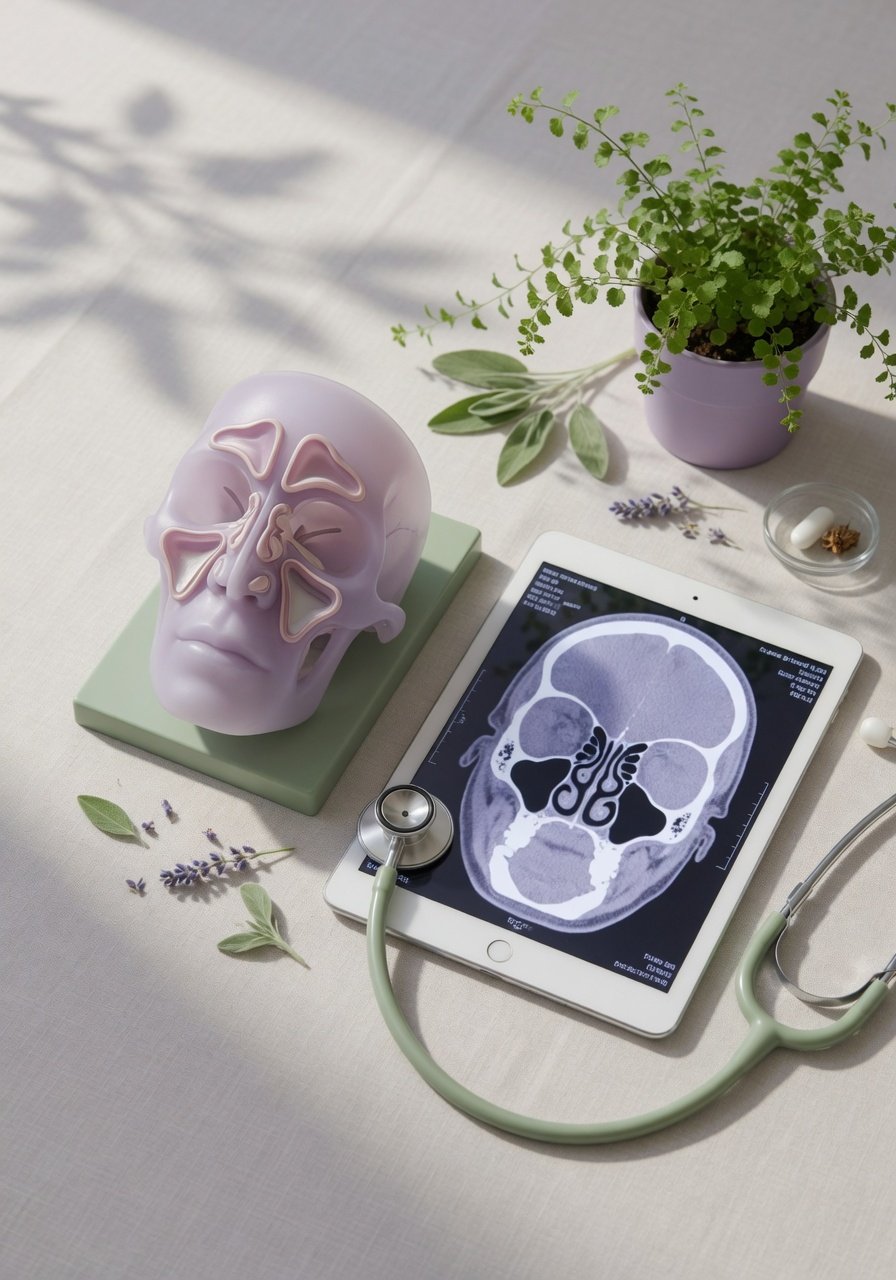
Chronic sinusitis may show thickened sinus walls or bony remodeling, meaning the area has looked inflamed for a longer time. CT is especially useful for showing sinus anatomy, drainage pathways, and bone changes.
Can sinus findings explain facial pressure, headaches, or cheek pain?
Sometimes. Sinus inflammation can cause facial pressure, nasal blockage, thick drainage, reduced smell, and discomfort around the cheeks, forehead, or between the eyes. Maxillary sinus disease can feel like cheek or upper tooth pressure. Ethmoid sinus inflammation may feel like pressure between the eyes or behind the nose.
However, many symptoms blamed on sinuses can also come from migraine, tension-type headache, dental disease, jaw joint problems, nerve pain, eye strain, or other causes. Imaging alone cannot prove that sinus changes are the cause.
Dental disease is an important overlap. Infection or inflammation around upper teeth can affect the nearby maxillary sinus. If imaging mentions a tooth, molar, periapical lucency, periodontal disease, or odontogenic sinusitis, a dental evaluation may be part of sorting out the source.
Can mild sinus thickening explain blurred vision or double vision?
Mild mucosal thickening or a small retention cyst usually does not explain blurred vision, double vision, or an eye that appears misaligned. Those symptoms often require a separate eye, neurologic, or urgent medical evaluation depending on severity and timing.
Sinus disease can affect the eye area in uncommon but important situations, usually when there is a complication such as spread of infection to the orbit or pressure from a more aggressive sinus process. Imaging reports may mention orbital swelling, abscess, bone erosion, cavernous sinus concerns, or intracranial extension if these are suspected.
Symptoms that are more concerning include double vision that is new or worsening, eye bulging, severe eye pain, swelling or redness around the eye, fever, reduced vision, trouble moving the eye, or a severe headache. These symptoms deserve prompt medical attention even if a prior scan described only mild sinus changes.
What about mastoid fluid on MRI or CT?
The mastoid air cells are small air spaces in the bone behind the ear. MRI sometimes shows a small amount of fluid or bright signal there. This can happen after a cold, with Eustachian tube dysfunction, allergies, or middle-ear inflammation. A small mastoid effusion may be incidental, especially if the ear exam is normal.
Mastoid fluid matters more when it matches ear symptoms such as ear pain, fever, drainage, hearing loss, significant pressure, or swelling/redness behind the ear. CT findings that suggest true mastoiditis are more concerning when they include destructive bone changes, coalescent mastoid disease, or complications. Many reports specifically say there is no mastoiditis or no destructive temporal bone process, which is reassuring.
Would an MRI help for sinus or ear symptoms?
It depends on the question. CT is usually better for sinus anatomy and bone detail, including blocked drainage pathways, chronic bony thickening, dental-related sinus disease, and surgical planning. A dedicated sinus CT often provides more useful sinus detail than a routine brain MRI.
MRI is better for soft tissues, nerves, the brain, orbit, and inner ear-related concerns. For example, MRI may be considered when there is unexplained sensorineural hearing loss, persistent one-sided tinnitus, certain balance symptoms, suspected nerve-related problems, orbital concerns, or neurologic symptoms. A routine brain MRI may not be the same as a dedicated sinus CT or a dedicated internal auditory canal MRI.
In other words, more imaging is not always the answer. The best test depends on what your clinician is trying to rule in or rule out.
When sinus findings are often incidental
Sinus findings are more likely to be incidental when they are described as mild, scattered, minimal, or small; when there is no air-fluid level; when most sinuses remain well aerated; and when you do not have matching nasal or facial symptoms.
- Mild ethmoid mucosal thickening on a brain MRI may reflect congestion or allergies.
- A small maxillary retention cyst is often a benign incidental finding.
- Small mastoid fluid may not mean mastoiditis if there is no ear pain, fever, hearing change, or concerning CT bone change.
- Chronic sinus changes may matter if symptoms are persistent, recurrent, or affect quality of life.
When sinus findings deserve follow-up
Follow-up is more likely to be helpful when the imaging shows moderate to severe sinus disease, near-complete sinus opacification, chronic bony remodeling, multiple sinuses involved, blocked drainage pathways, suspected dental source, or possible complications.
Depending on the situation, the next step may be a primary care visit, an ENT evaluation, a dental evaluation, an eye exam, or neurologic assessment. The scan is one piece of the puzzle; the physical exam and symptom history often determine what matters most.
Questions to ask about your report
- Is the sinus finding mild, moderate, or severe?
- Does it match where my symptoms are?
- Is there fluid, frothy secretion, or an air-fluid level?
- Are the sinus drainage pathways blocked?
- Is there any dental abnormality that could affect the maxillary sinus?
- Are the mastoids and middle ears otherwise clear?
- Would a dedicated sinus CT, ENT exam, dental exam, eye exam, or MRI answer a specific question?
When to talk to your doctor
Talk with your clinician if you have persistent or recurrent congestion, facial pressure, thick nasal drainage, reduced smell, ear pain, hearing changes, or symptoms that do not fit the imaging report. Seek urgent care for sudden vision loss, new or worsening double vision, eye swelling or redness with fever, severe sudden headache, confusion, weakness, facial droop, speech trouble, seizure, or swelling/redness behind the ear.
This information is general education and is not a diagnosis. Always rely on the official radiology report and a qualified clinician who can connect the imaging with your symptoms and exam.
Get AI-powered analysis of your CT or MRI scan
Upload your DICOM files and receive a clear, patient-friendly report in minutes.
Analyze my scan