
Diverticulosis on CT: Food, Fiber, and Common Myths
Diverticulosis on CT often causes no symptoms. Learn what the finding means, how fiber can help, and why nuts and seeds usually stay on the menu.

Have your own scan or report? Get a clear, plain-language explanation in minutes.
Reading “diverticulosis” on a CT report can raise immediate questions: Is this causing my abdominal pain? Should I stop eating seeds? Do I need treatment? The reassuring starting point is that small colon pouches without surrounding inflammation are a common finding, often discovered during a scan done for something else.
This article provides general education, not a diagnosis or individual medical advice. Your clinician can interpret your CT findings alongside your symptoms and medical history.
What does diverticulosis on CT mean?
Diverticula are small pouches that bulge outward through weak spots in the wall of the colon, or large intestine. Having these pouches is called diverticulosis. They often occur in the descending and sigmoid colon, which are on the left side of the abdomen.
A report might say “left-sided diverticulosis without diverticulitis” or “diverticula without surrounding inflammatory changes.” In plain language, the scan shows pouches but no visible inflammation around them.
- Diverticulosis: Pouches are present, often without symptoms.
- Diverticulitis: One or more pouches become inflamed. This is a different condition that needs clinical assessment.
Uncomplicated diverticulosis by itself generally does not require antibiotics, a liquid diet, or repeat CT scans just to monitor the pouches.
“Does this explain my abdominal pain?”
Not automatically. Many people have diverticulosis without knowing it. When a CT shows no surrounding inflammation, the finding should not simply be assumed to explain pain, bloating, constipation, burping, or reflux.
Some people with diverticula experience ongoing abdominal discomfort or bowel changes, but those symptoms overlap with constipation, irritable bowel syndrome, and other conditions. Burping and acid reflux are not typically explained by uncomplicated colon pouches.
A scan that finds no acute cause of pain is useful information, but it does not mean the symptoms are imaginary or that every possible cause has been excluded. The location and timing of pain, bowel habits, medicines, examination, and sometimes other tests help guide the next steps.
Fiber: support for bowel health, not a cure
Fiber helps support regular bowel movements and can make stools easier to pass. A fiber-rich eating pattern is commonly recommended for people with diverticulosis, particularly when constipation is a concern. However, fiber does not remove existing pouches, and evidence that supplements alone prevent diverticulitis is limited.
Build up gradually
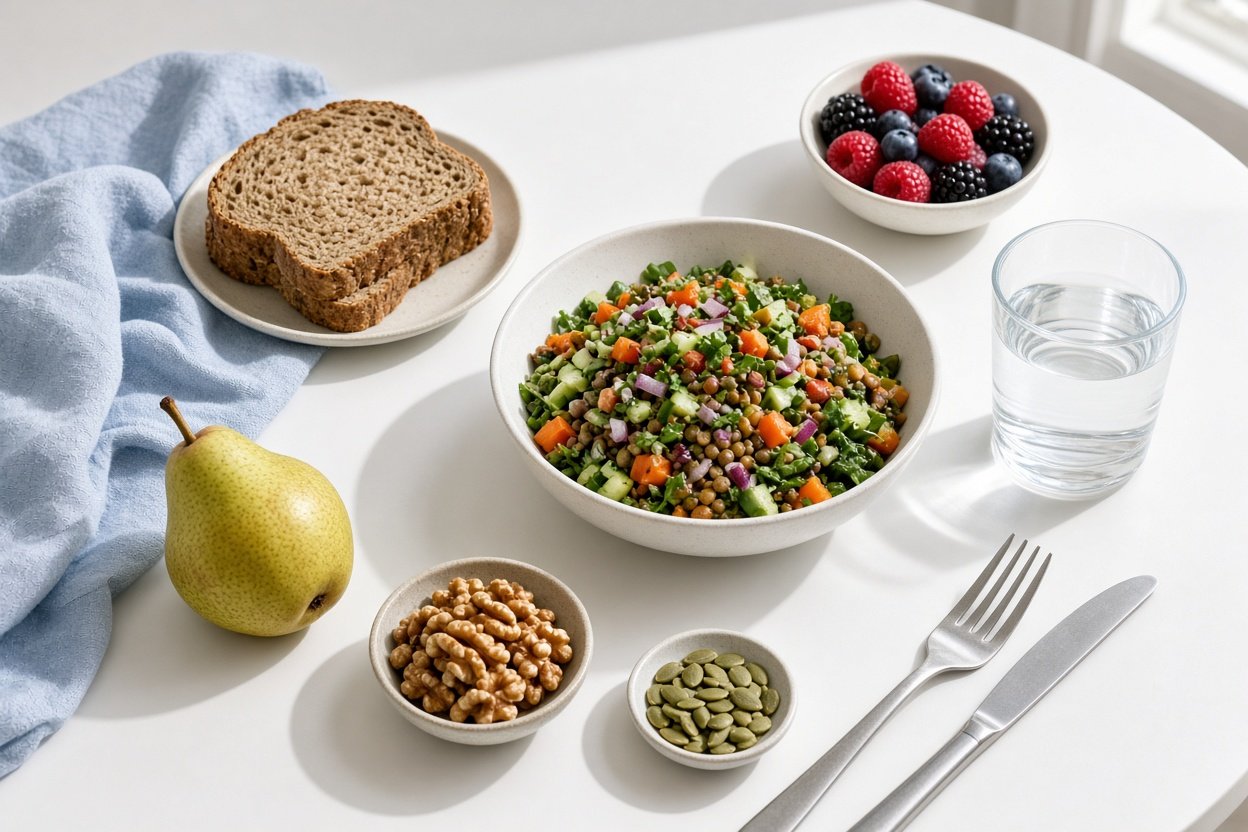
Adding a lot of fiber overnight can cause gas, cramping, or bloating. A more comfortable approach is to make small changes over time. Everyday options include:
- Oatmeal or whole-grain cereal at breakfast.
- Beans, lentils, or chickpeas added to soup or salads.
- Fruit such as berries, pears, or apples with the skin when tolerated.
- Vegetables with meals and whole grains such as barley or brown rice.
- Nuts or seeds as part of meals or snacks.
There is no single perfect “diverticulosis diet.” A varied eating pattern that is comfortable and sustainable matters more than a rigid list of allowed foods. For people who struggle to get enough fiber from food, a clinician or dietitian can discuss whether a supplement such as psyllium is appropriate.
Hydration: helpful, but more is not always better
Fluids help fiber work effectively and support normal stool consistency. Drinking regularly through the day can be helpful, especially when increasing fiber or using a fiber supplement.
There is no special water target that prevents diverticular complications for everyone. Needs vary with activity, weather, body size, and health conditions. People with a prescribed fluid restriction, including some with heart or kidney disease, should follow their care team's guidance rather than automatically drinking more.
Common food myths and follow-up questions
Do nuts, seeds, popcorn, or corn get stuck in the pouches?
These foods were once routinely discouraged. Current evidence does not support avoiding them solely because of diverticulosis. Nuts, seeds, and popcorn have not been shown to increase the risk of diverticulitis.
Small seeds in foods such as tomatoes, strawberries, and cucumbers generally do not need to be removed. A food that repeatedly causes personal discomfort may deserve discussion, but discomfort is not proof that it is damaging the pouches.
Should I switch to a liquid or low-fiber diet?
Not simply because an otherwise uncomplicated CT report mentions diverticulosis. Temporary diet changes sometimes used during an acute illness are not routine long-term advice for pouches without inflammation. Unnecessary restriction can make it harder to get enough fiber and other nutrients.
Will changing my diet make the pouches disappear?
No. Established pouches generally remain. The aim of healthy habits is to support bowel function and overall health, not to erase the CT finding or guarantee that future problems cannot happen.
Does diverticulosis mean cancer or require a colonoscopy?
Diverticulosis is not cancer and is not considered a precancerous condition. Finding it incidentally does not automatically mean an urgent colonoscopy is needed. However, a routine abdominal CT does not replace colorectal cancer screening or follow-up after previous polyps. Screening decisions depend on age, history, symptoms, and prior test results.
Practical prevention without promises
A balanced, fiber-rich eating pattern, regular physical activity, and avoiding smoking support general health and may help lower the risk of diverticulitis. Limiting red meat and choosing more plant-based foods may also be helpful. No lifestyle plan eliminates every future complication, and developing one does not mean someone failed to eat correctly.
It is also worth reviewing frequent use of medicines such as ibuprofen or naproxen with a clinician, since regular use is associated with diverticular complications. Prescribed medicines, including aspirin, should not be stopped without medical guidance.
When to talk to your doctor
Discuss persistent abdominal pain, troublesome constipation, ongoing bowel changes, unexplained weight loss, or questions about screening—even if the CT shows no inflammation.
Seek urgent medical care for severe or worsening abdominal pain, especially with fever, repeated vomiting, or inability to pass stool or gas. Heavy rectal bleeding, black stools, fainting, or marked weakness also need urgent assessment. New symptoms should not be dismissed as “just diverticulosis.”
Get AI-powered analysis of your CT or MRI scan
Upload your DICOM files and receive a clear, patient-friendly report in minutes.
Analyze my scan