
Liver Lesions on MRI: Cyst, Hemangioma, or Something Else?
MRI can help sort liver cysts, hemangiomas, and concerning lesions. Learn what report terms mean and what to ask next.
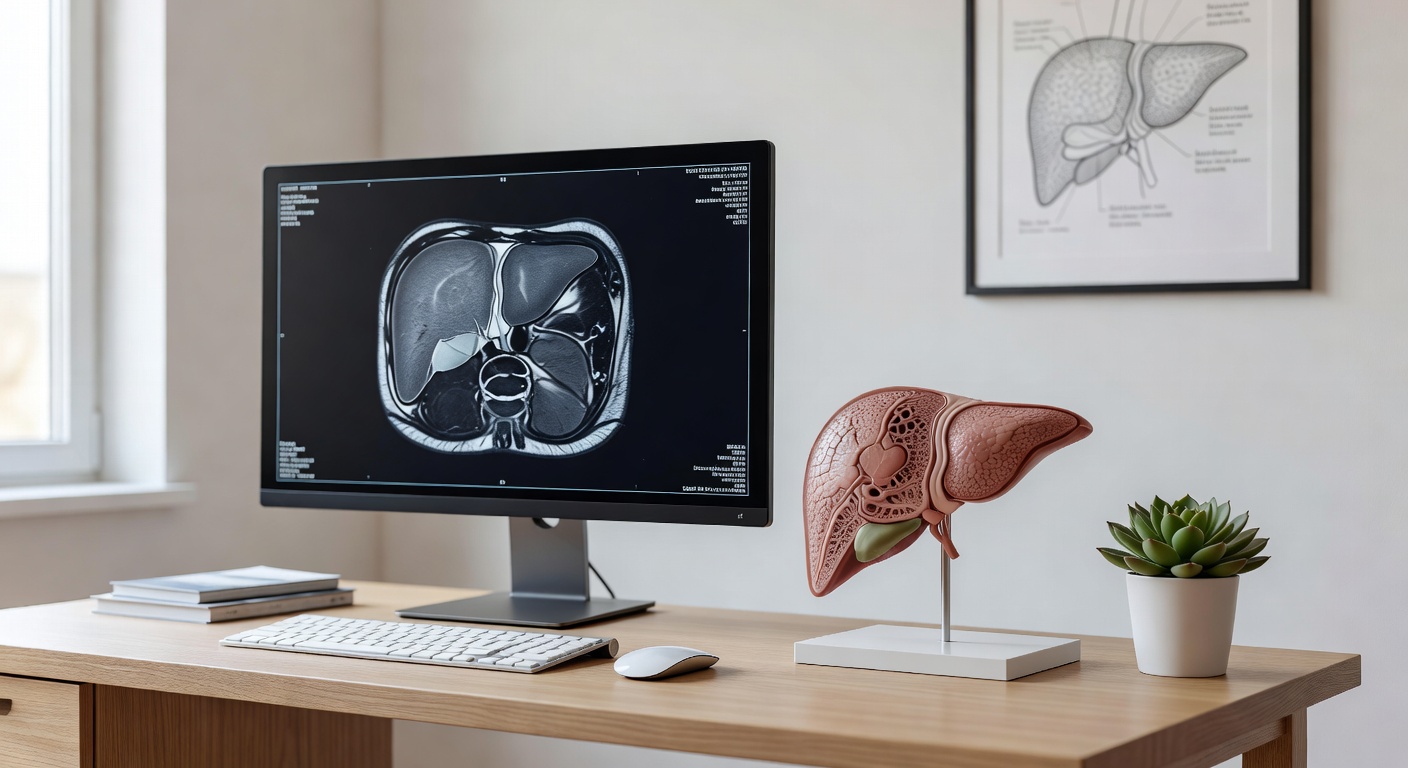
Have your own scan or report? Get a clear, plain-language explanation in minutes.
Seeing “liver lesion” on an MRI report can feel alarming
A liver lesion simply means an area in the liver looks different from the surrounding liver tissue. Many liver lesions are benign, such as cysts or hemangiomas. Others need closer evaluation, especially when there are many lesions, when they are new, or when the report uses words like indeterminate, suspicious, or metastases cannot be excluded.
This article is general education, not a diagnosis. Only your radiologist and treating clinician can interpret your official report in the context of your symptoms, medical history, lab results, and prior scans.
Why MRI is often used to characterize liver spots
Ultrasound or CT may first notice a small spot in the liver. MRI is often ordered because it can show tissue details in several different ways. Radiologists do not usually rely on one image or one sequence. They look for a pattern across the full exam.
A complete liver MRI may include images before contrast, several phases after contrast injection, T2-weighted images, diffusion-weighted images, and sometimes specialized sequences that evaluate fat, iron, or bile flow. Each sequence answers a different question.
One MRI series is like one page from a book. It may show that a liver spot exists, but the full exam is usually needed to understand what it most likely represents.
Common benign liver lesions
Simple liver cyst
A liver cyst is a fluid-filled pocket. On MRI, a simple cyst often looks very bright on T2-weighted images, dark on T1-weighted images, and does not enhance after contrast. In plain language, it behaves like water. If a lesion has the classic appearance of a simple cyst, it usually does not require aggressive workup.
Hemangioma
A hemangioma is a common benign cluster of blood vessels. On MRI, many hemangiomas are very bright on T2 images and show a characteristic contrast pattern: they may enhance around the edges first and then slowly fill in over time. This pattern helps radiologists distinguish them from many other types of lesions.
Some hemangiomas are tiny or have less classic features, so the report may say the lesion is favored to represent a hemangioma or likely benign rather than giving an absolute label.
Focal fat or perfusion changes
Not every liver “spot” is a mass. Sometimes a region looks different because of fat distribution or blood-flow differences. These can appear as areas of brighter or darker signal or enhancement, especially on a single contrast phase. Radiologists use multiple sequences and prior scans to avoid mistaking these changes for tumors.
When liver lesions need more attention
Some MRI reports describe lesions as indeterminate hepatic lesions. This means the radiologist sees a real finding, but the imaging pattern is not specific enough to confidently call it benign or malignant. Indeterminate does not automatically mean cancer, but it does mean more context is needed.
Reports may also say metastatic disease cannot be excluded or suspicious for metastases. Metastases are cancers that have spread from another part of the body to the liver. This wording is more concerning, especially when there are multiple lesions in both lobes of the liver, when lesions restrict diffusion, or when they have irregular rim enhancement or heterogeneous internal features.
Other possibilities can include primary liver cancers, infection or abscess, inflammatory conditions, treated lesions, or uncommon benign tumors. The exact meaning depends on the full imaging pattern and clinical setting.
What T2, diffusion, and contrast phases mean in plain language
T2-weighted images
T2 images make fluid look bright. Cysts and many hemangiomas are often very bright on T2. However, some tumors can also appear bright or heterogeneous on T2, so this sequence alone usually cannot provide the full answer.
Diffusion-weighted imaging
Diffusion images show how freely water molecules move within tissue. Many aggressive tumors, abscesses, and cellular lesions can look bright on high diffusion images. Radiologists compare this with an ADC map to confirm whether there is true restricted diffusion. A diffusion image by itself can raise concern, but it is not the whole diagnosis.
Contrast phases
After MRI contrast is injected, images are taken at different times. These are often described as arterial, portal venous, delayed, or hepatobiliary phases depending on the protocol and contrast agent. Radiologists watch how a lesion “takes up” and “lets go of” contrast over time.
- Cysts usually do not enhance.
- Hemangiomas often show a gradual fill-in pattern.
- Some tumors may enhance early, wash out later, show a capsule, or show rim enhancement.
- Some metastases may appear hypoenhancing or rim-enhancing, depending on the primary cancer type and timing of images.
Why prior scans matter so much
One of the most helpful questions is: Was this lesion there before? A small liver lesion that has looked the same for years is often less concerning than a new lesion or one that is growing. Prior ultrasound, CT, MRI, or even imaging done for unrelated reasons can be extremely useful.
Radiologists compare size, number, enhancement pattern, and overall liver appearance. Stability over time can support a benign diagnosis. Rapid change may prompt further evaluation.
Why lab tests and medical history matter
Imaging findings are interpreted alongside clinical context. A person with no known cancer, normal liver tests, and a classic cyst-like lesion is different from a person with a known cancer history and many new liver masses.
Your clinician may consider blood tests such as liver function tests. Depending on the situation, they may also consider hepatitis testing or tumor markers such as AFP, CEA, or CA 19-9. These tests do not replace imaging and are not used the same way for every patient, but they can add important context.
Helpful questions to ask after your official report
- Does the report say the lesion is benign, likely benign, indeterminate, or suspicious?
- Were all MRI sequences reviewed, including T2, diffusion/ADC, and all contrast phases?
- Are there prior scans available for comparison?
- How many lesions are there, and are they in one area or throughout the liver?
- Do I need follow-up imaging, a liver-protocol MRI or CT, blood tests, specialist referral, or biopsy?
- If follow-up is recommended, what time frame is suggested in the official report?
It is reasonable to ask for clarification of confusing phrases. For example, “cannot be excluded” often means the imaging is not definitive; it does not always mean the radiologist thinks the diagnosis is likely. On the other hand, wording such as “suspicious for malignant disease” should be reviewed promptly with the ordering clinician.
When to talk to your doctor
Talk with your doctor after any MRI report that mentions an indeterminate, new, growing, or suspicious liver lesion, or multiple liver lesions. Seek urgent medical care sooner for severe abdominal pain, fever, yellowing of the skin or eyes, confusion, vomiting blood, black stools, or rapid worsening symptoms.
Remember: this information is for general education and is not a diagnosis. Your next steps should be based on the official radiology report and your clinician’s assessment.
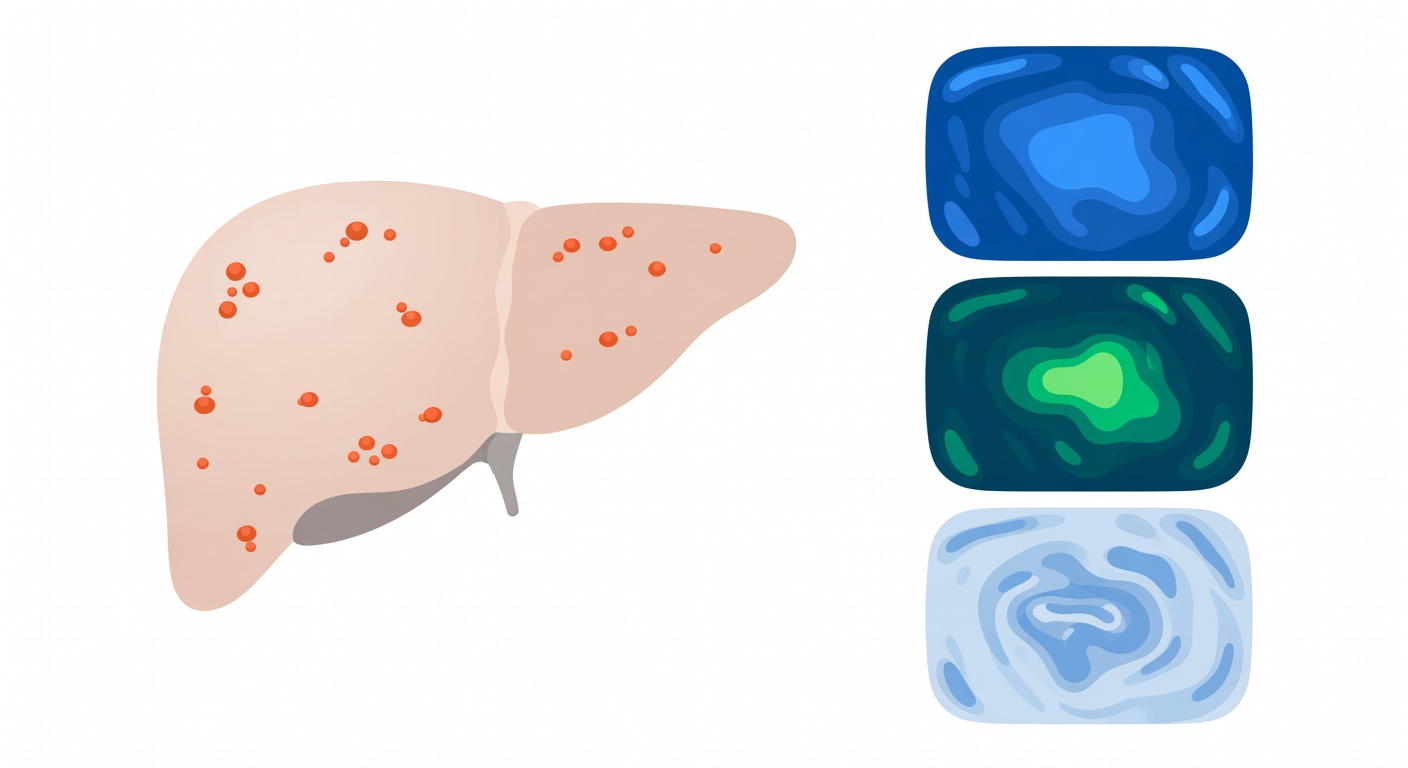
Get AI-powered analysis of your CT or MRI scan
Upload your DICOM files and receive a clear, patient-friendly report in minutes.
Analyze my scan