
Understanding MRI Scans: A Guide for Patients
A Magnetic Resonance Imaging (MRI) scan is one of the safest and most detailed tools available to modern medicine. By combining advanced magnetic technology with the latest in AI-enhanced analysis, we can now provide insights that were impossible just a few years ago.
What is an MRI Scan?
A Magnetic Resonance Imaging (MRI) scan is a non-invasive medical test that allows doctors to see detailed "slices" of your internal organs and tissues. Unlike an X-ray or CT scan, an MRI does not use radiation.
How it works:
Instead, it utilizes three main components:
- A Powerful Magnet: This aligns the protons (hydrogen atoms) in your body.
- Radio Waves: These are pulsed at the body to temporarily disrupt that alignment.
- Sensitive Sensors: When the radio waves stop, the protons return to their original position, emitting signals that a computer translates into high-resolution 3D images.
Because the body is mostly water, and water contains hydrogen, MRI is exceptionally good at showing soft tissues like the brain, spinal cord, muscles, and ligaments.
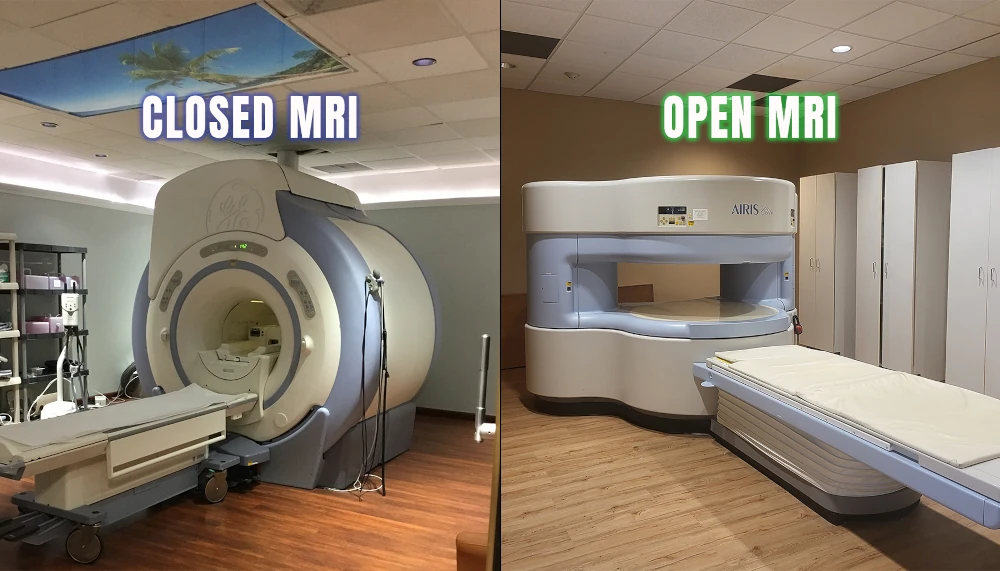
Contrast MRI: Enhancing the View
Sometimes, your physician may request a "contrast" MRI. This involves the injection of a special dye—most commonly a gadolinium-based contrast agent (GBCA)—into your bloodstream.
Why use contrast?
Contrast acts like a highlighter, making specific structures like blood vessels, tumors, or areas of inflammation stand out clearly against the surrounding tissue. It is particularly useful for detecting early-stage cancers or neurological issues.
Health Effects & Safety
Gadolinium is generally considered safe, but as with any medical procedure, there are factors to consider:
Common Side Effects
These are typically mild and include a metallic taste in the mouth, nausea, or localized coolness at the injection site.
Kidney Health
In very rare cases, patients with severe kidney disease may experience a condition called Nephrogenic Systemic Fibrosis (NSF). Modern screening protocols and newer "macrocyclic" contrast agents have made this extremely rare in 2026.
Gadolinium Deposition
Recent research has shown that tiny amounts of gadolinium can remain in the brain and bones for years. While no clinical evidence suggests this causes harm to people with healthy kidneys, radiologists now follow a "strict necessity" principle to use contrast only when vital.
MRI vs. CT Scan: A Comparison
Patients often wonder why they were referred for an MRI instead of a CT scan, or vice versa. They are complementary tools, but they serve different purposes.
| Feature | MRI Scan | CT (Computed Tomography) |
|---|---|---|
| Technology | Magnetic fields and radio waves | X-ray radiation |
| Best For | Soft tissues (brain, nerves, ligaments) | Bones, lungs, and trauma/emergencies |
| Duration | 15 to 60+ minutes | 5 to 10 minutes |
| Noise Level | Loud thumping/clicking | Quiet |
| Cost | Generally higher | Generally lower |
| Safety | No radiation; metal implants are a risk | Small radiation dose; safe for most metal |
How Scans are Evaluated: AI and the Radiologist
The most significant change in 2026 is how your images are interpreted. It is no longer a choice between a human or a machine; it is a collaborative partnership.
The AI Assistant
On specialized platforms, AI algorithms serve as the "first eyes" on your scan. AI excels at:
- Early Detection: Spotting tiny anomalies (as small as a few millimeters) that might be missed by the human eye.
- Triage: Automatically moving urgent cases (like a potential stroke) to the top of the radiologist's list.
- Consistency: Providing precise measurements of tumors or organ volumes to track changes over time with mathematical accuracy.
The Radiologist's Expertise
While AI is powerful, the Radiologist—a doctor specialized in medical imaging—remains the final authority. They provide:
- Clinical Context: Integrating your medical history, symptoms, and other lab results into the final diagnosis.
- Complex Reasoning: Differentiating between a rare disease and a simple anatomical variation that AI might misidentify.
- Accountability: Verifying every finding to ensure the highest standard of patient care.
Note: On our platform, AI-driven analysis acts as a "digital safety net," ensuring that your scan is reviewed with both human wisdom and machine precision.
Final Thoughts
An MRI is one of the safest and most detailed tools available to modern medicine. By combining advanced magnetic technology with the latest in AI-enhanced analysis, we can now provide insights that were impossible just a few years ago.